Stop Measuring Your Life Against Someone Else's Best Day

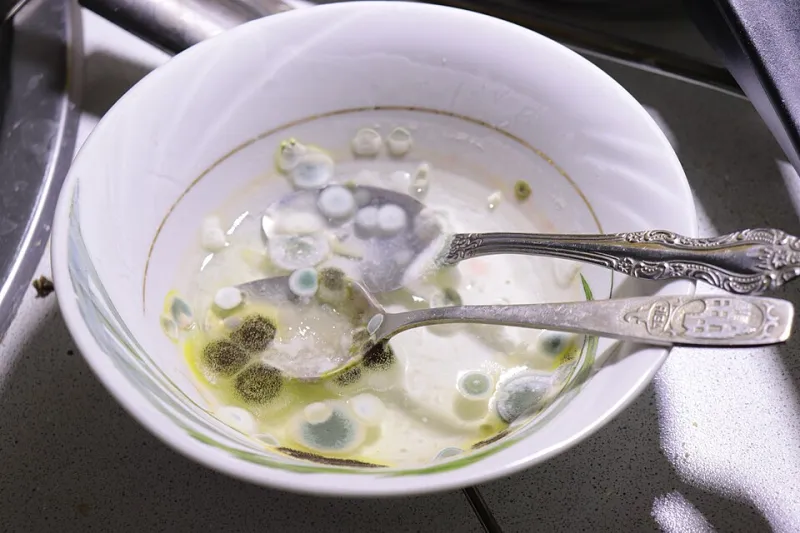
Photo: Photograph by Mike Peel (www.mikepeel.net)., CC BY-SA 4.0, via Wikimedia Commons
Let's be honest for a second. You've done it. I've done it. We've all opened Instagram at 11 p.m. on a Tuesday, half-asleep, and somehow ended up feeling terrible about our apartment, our career, our relationship, and our bone structure — all within about four minutes of scrolling.
That's not an accident. And it's not a personal failing either. It's the natural result of what happens when you spend a significant chunk of your waking hours consuming the most curated, flattering, strategically timed moments of other people's lives and then holding your own unfiltered reality up against them.
Spoiler: your reality is always going to lose that fight.
The Comparison Game Has Always Existed — But This Is Different
Human beings have been comparing themselves to each other since forever. Keeping up with the Joneses isn't a new concept. But what's changed in the last decade or so is the scale and the speed of it.
Back in the day, your social comparison pool was pretty limited — your neighbors, your coworkers, maybe people you saw at church or at the gym. Now? You're passively competing with thousands of people simultaneously. Your college roommate's kitchen renovation. That fitness influencer's 5 a.m. routine. Your former colleague's LinkedIn post about landing a VP role at 31. It's relentless.
And here's the thing that really messes with your head: your brain doesn't naturally distinguish between a genuine life update and a carefully crafted personal brand moment. It just registers the image, the caption, the vibe — and files it under "what other people's lives look like." Then it quietly stacks that against your Tuesday afternoon, which involves leftover takeout and a sink full of dishes.
What This Is Actually Doing to You
Psychologists call it social comparison theory, and it's been studied since the 1950s. The basic idea is that we determine our own social and personal worth by measuring ourselves against others. That impulse isn't inherently bad — it can push us to grow. The problem is when the comparison is constant, one-sided, and built on incomplete information.
When you're always comparing your inside to someone else's outside, a few things start to happen. Your baseline for "normal" shifts upward in unrealistic ways. You start feeling chronically behind, even when you're objectively doing fine. Small wins stop feeling like wins because someone else always seems to be doing more, faster, with better lighting.
Over time, this erodes something important: your ability to actually feel good about your own life on its own terms. You stop asking "am I happy?" and start asking "am I as happy as she looks?" Those are very different questions, and only one of them has an answer that means anything.
The Difference Between Inspiration and Comparison
Here's where it gets nuanced, because not all comparison is toxic. There's a version of looking at someone else's life and thinking, that's possible — I want to work toward something like that. That's inspiration. That's useful.
Toxic comparison is different. It doesn't motivate you — it paralyzes you. It doesn't make you think "I could build something great." It makes you think "I'm already too far behind to bother." It turns other people's success into evidence of your own inadequacy rather than proof that good things are achievable.
A simple gut-check: after you look at someone else's life, do you feel energized or deflated? Do you want to take action, or do you want to close the app and lie on the floor? One of those is inspiration. The other one is the trap.
Real Ways to Break the Cycle
Okay, so we've established that this is a real thing and it's messing with people's heads. Now what?
Curate your feed like it's your actual living space. You wouldn't hang a poster on your wall that made you feel bad about yourself every time you looked at it. Apply that same logic to who you follow. Unfollowing someone isn't a declaration of war — it's just choosing what you want to let into your mental space. You're allowed to do that.
Get specific about what you're actually comparing. Most of the time, comparison is vague and sweeping — you just feel generally worse about your whole life. Try to pin it down. Is it your career you're worried about? Your living situation? Your relationship status? Getting specific helps because it turns a fog of inadequacy into an actual, addressable thing. You can't work on "my whole life is insufficient," but you can work on a specific goal.
Create more than you consume. This one sounds almost too simple, but it works. The comparison trap gets its grip when you're in passive mode — scrolling, watching, absorbing. When you shift into making something, whether that's cooking a meal, writing something, working out, building a side project, whatever — you're back in your own lane. You're focused on your own progress, not someone else's.
Talk to actual humans about actual life. One of the sneaky side effects of heavy social media use is that it can make you feel like you know how people's lives are going when you really don't. Having real conversations with friends — where people admit they're stressed, confused, or figuring things out — is a fast way to remember that everyone's backstory is messier than their feed suggests.
Practice what some people call "enoughness." This isn't about lowering your ambitions. It's about being able to look at your life right now, in this moment, and recognize that there's real value in it — even when it's imperfect and incomplete. That's not settling. That's sanity.
The Bigger Picture
Here's the thing nobody really wants to say out loud: the people whose lives look the most put-together on the internet are often working the hardest to project that image. The polished aesthetic, the perfectly timed posts, the curated aesthetic — that stuff takes effort. You're not seeing a life; you're seeing a production.
That doesn't mean those people aren't happy or successful. Some of them genuinely are. But what you're looking at is still a selection, not a full picture. It's the trailer, not the movie. And you're out here rating your whole film against someone else's two-minute preview.
Your life — the full, unedited, Tuesday-afternoon-with-leftover-takeout version of it — is the real thing. The stuff that doesn't make it to anyone's feed is often the most meaningful part of anyone's existence: the quiet mornings, the slow progress, the private wins, the relationships that don't photograph well but mean everything.
You're not behind. You're just not performing.
And honestly? That might be the most freeing thing you can hold onto.